Thursday, 30 April 2009

Worry, worry, worry


April 2009

As I write this I am not sure what I should be worrying about most as the chief executive of a small to medium sized charity. Should I be worrying about the global economic problems and how they are manifested here in the United Kingdom and in particular on the services that we are paid to deliver? Or should I be worrying about the possible impact of the pandemic flu and how it will affect our services and users and what actions we should be taking to prepare the Trust to reduce the impact as far as possible.

The issue about the global economic problems and how it is manifested here in Maghull is that pressures on the government, the bank bail outs, mean that there is less money for the public services. Clearly we are not public services as such. But the Local Authority does pay the Trust fees for people to access those services. The uplifts that we are receiving this year are very modest. The impact of this is that it limits what we can pay our staff. These staff are not paid highly, this therefore is a political issue. It needs political will to commit resources to pay a wage that truly values their contribution to ensuring that vulnerable and frail people are supported and cared for. Not paying a decent wage reflects on the priority that government affords such carers and service users they support, whether older people, people with dementia or people with physical and learning disabilities. The current economic climate serves only to exacerbate this situation.

In considering the other worry, it seems a fine line between being prepared but not generating panic amongst our staff and service users which can be debilitating and only serve to divert attention from constructive action. The Trust has convened our contingency team and will now be meeting on a weekly basis to plan and prepare so we are as ready as we can be to mitigate any impact on our services.
A challenging time for us all!

Hilary Rowland

Monday, 23 March 2009

Springtime at Parkhaven

It is that time of year when our service managers plan for the coming 12 months and reflect on the previous year. It is a time to celebrate what has gone well, what we are particularly proud of and what we want to do differently and better next year. Our ethos in the Trust is to always think that we can learn and do better. We do not stand much truck with ‘we have always done it that way’! In particular we afford a high priority to listening to what the users of our services have to say and what they think is important. These views and feedback are fundamental to the priorities for the coming year. In planning for the year ahead we ask that each service manager present to their colleagues their plans and reflections. The evidence of the Commission for Health Improvement, the precursor of the Healthcare Commission, (although not for long as it is soon to become the Care Quality Commission) was that departments within organisations did not learn from each other. We are determined to ensure that our services do learn from each other so that they benefit from the best of each other. In addition to sharing plans and ideas, the Trust has developed its own internal audit programme which entails different senior managers leading on different matters, visiting all the services and looking at their specialist topic on a regular basis. These include catering, medication, personnel, care plans, health and safety and finance. So as we enjoy and are inspired by beautiful surroundings with the daffodils in bloom and the cherry blossom just beginning to emerge we are confident that the systems we have in place do promote learning in the various parts of our organisation. These systems are crucial to the quality and safety of the care and services that are delivered and help us to work towards achieving an excellent experience for all those who use our services.


Hilary Rowland
Chief executive,
23.03.09

Monday, 2 February 2009

The opening of windows and doors during these cold economic winds

Welcome to the first blog of 2009. It did not take long for all those good intentions to be swept away before the first month has passed. The cold winter chill of the economic climate is taking its toll on this particular charity and requiring all our focus, wit and ingenuity.

In the middle of last year the Trust believed it had exciting plans for the coming year; a plan for the use of our large Bartlett building working with another charity which had great synergy with the wider plan for the site. This plan included an extensive new build for the site comprising accommodation and day services. It may be that this scheme will still be realised although a bit delayed, on the other hand the finances may no longer seem viable. This is very disappointing but it does now afford a window of opportunity. So one window closed, then a second window, but the closure of the second window actually opened another. Thus we have an opportunity to think again about the use of this big building which could become a significant burden. It actually offers exciting opportunities to develop and improve our services which we will seize. There is no doubt that the hardening and deepening of this economic crisis is forcing us all to be more resourceful. It is making us think about using what we have in different ways.

We also hope the current economic climate will have a positive impact on the staffing in our sector. In more positive times it can be difficult to recruit to the care sector despite the great opportunities it can afford to make a real difference to lives of people who need support. There is no doubt it has the potential to offer a rewarding career. Unfortunately the status of people in the care sector does not sufficiently recognise the importance of their role. We hope that through reduced employment opportunities elsewhere different people will consider a career in care. This will be a positive outcome of these difficult times and may open doors for people who would otherwise not have considered such careers.

These are challenging times but also exciting. We, at Parkhaven, hope that everyone has a happy and rewarding year and sees the opportunities that may be afforded by these constrained times.

Hilary Rowland
Chief executive
02.02.09

Thursday, 18 December 2008

Silent night .........


The Joseph Rowntree Foundation published a report in April, 08 Supporting older people in care homes at night by Kerr, D., Wilkinson, H., and Cunningham, C. (www.jrf.org.uk/knowledge/findings/socialcare/2201.asp ) It certainly made us at Parkhaven reflect on our practice.

Some of the key findings from this study of night time experiences of residents and staff in 3 care homes in Scotland were: managers were insufficiently involved in night-time supervision and practice, night staff often felt undervalued and isolated from the running of the home, night staff received less training than day staff, and the training was not specifically focussed on night time issues. There was a dependence on unfamiliar agency and bank staff which increased the workload on regular staff and compromised the quality of care for residents. Staff carried out routine and indiscriminate ‘checking’ throughout the night. The report also observed the unacceptable levels of noise and light during the night which affected the residents sleep and caused agitation. It was also concluded that the night time physical environment was disabling particularly for people with dementia. However, it was encouraging and motivating to read that the study showed that even minor changes in practice could result in improvements to the experience of residents at night.

So what are we going to do? The report was considered by our managers. They will now review their practice at night and consider the issues and how they relate to their own homes. This is a very important report because residential homes are a 24 hour service but the focus is more often on the day time experience. We are determined that ours should truly be an excellent 24 hour service. We will look at each of the aspects highlighted and agree what needs to be done including reducing the light and noise levels in an endeavour to give residents a silent night and an improved sleep which may then result in an improved day.


Hilary Rowland

18.12.08

Thursday, 27 November 2008

Hiding behind the credit crunch

There is no doubt that these are difficult and potentially bleak economic times but we should be cautious that the ‘ credit crunch’, now a somewhat overused phrase, is not used as a reason for sloppy management or poorly thought through decision making. It would be very easy to hide behind the ‘credit crunch’ as a reason for not doing something when in essence it may not have been fully thought through in the first place. Or people may short cut the decision making process and instead of putting effort in to thinking rigorously about a particular situation and come to a rational and well considered view with well articulated reasons for a particular decision, the glib response, it’s the ‘credit crunch’.

Nor is everything all doom laden. In fact at Parkhaven we have taken two very positive steps this month. Firstly all staff were awarded a bonus to be paid in their Christmas wages to thank them for what they have done and to try and offset some of the financial pressure and constraint that some staff may be feeling at this time. This is a small recognition for all that staff have done over the first 6 months of the year, which for the Trust showed some excellent indicators. Our services continue to be in considerable demand, we are seeing more people than we have done in decades and our services are increasingly flexible and innovative. Our staff relish their training and sickness is down. It is difficult to measure the success of services such as ours but underpinning all of what we are doing should be the importance of treating all the people who use our services with the utmost dignity and respect. This does mean having a real attention to detail about what matters to a particular individual. It can often be the small things that can make a real difference.

This month we have also embarked on planting a new wood for our local community. 1600 trees (native species) are being planted over two weekends with the help of the British Trust for conservation volunteers and a grant from the English Woodland Trust. Another reason to be optimistic.

So we should not let our heads drop at this time but instead we should celebrate what is good and value what we have rather than what we have not.

Hilary Rowland

26.11.08

Tuesday, 21 October 2008


A Sisyphean task

It is that time of year when the gardeners begin the Sisyphean task of sweeping up the leaves. It is said that this year is going to be an excellent autumnal display – ‘living art’ was how one gardener described it as. Parkhaven is lucky that it does have the immense gift of land (last month’s blog related how we use that land for therapeutic purposes).

But as well as the Sisyphean task of sweeping up the leaves, there is another uphill struggle and that is the debate and open discussion that there needs to be about dementia. Terry Pratchett, author, who was recently diagnosed with dementia is certainly doing an excellent job to raise the profile of this very debilitating disease. He wrote on the day of the launch of the Alzheimers’s Society report Dementia: out of the shadows a letter to the Times (7.10.08) in which he argues for an end to the stigma and misunderstanding that surround this disease. The first step he writes is ‘to talk openly about dementia because it’s a fact well enshrined in folklore, that if we are to kill the demon then first we have to say its name’. We are trying to do this at our Trust.

Currently the Trust is supporting hundreds of people with dementia. We have an extensive menu of services to support people. We have separate day services for older and young people with dementia which offer space and grounds to walk, gardening, yoga and music sessions and lunches out. There is choice and hopefully something for everyone including carers. Note books go back and forth so there is communication between relatives and the Centre and a monthly newsletter. Next month we start on a new venture: a weekend away for four of our service users, an opportunity for a holiday. There are also opportunities for short breaks in our newly refurbished home or a permanent placement. As well as speaking its name, those with dementia and their carers need excellent services and support. The Trust is endeavouring to do its bit.

We hope to give people hope and laughter and will certainly be playing our part ‘to bring dementia out of the shadows’ to kill the demon.

Hilary Rowland

Tuesday, 30 September 2008


Gardening at Parkhaven, for people with dementia

Despite the credit crunch and the depressing news that is hitting us daily, there is good news. Recently the Trust was awarded a grant to help people keep gardening.

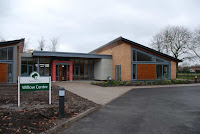
Three days a week, Parkhaven’s gardeners Keren and Richard work with service users in the gardens around the Willow Day Centre and at The Haven, our plot a hundred yards away, where there are nice greenhouses, raised beds, an orchard, doves, chickens and geese. We sow seeds, take cuttings, pot on, plant up our beds, fill hanging baskets, pick flowers and vegetables, feed the chickens. Come and look round!

Gardening can really help people with dementia: it keeps you fit, it’s good to be outside, contact with nature and the seasons inspires hope, and the planning and sequencing skills involved in gardening seem to be particularly effective in preserving mental agility. The grand name for this is ‘horticultural therapy’.

We have recently been awarded a grant of £95,000 from the Henry Smith Charity to develop the work we do at The Willow, so that anyone with dementia living in the community can garden for a few hours with us at Parkhaven. Carers can come too, or might enjoy a well-earned break instead.

We will also be helping people with dementia look after their own gardens: they get some exercise (but we do the heavy work), they feel good about their garden, they get some company. We hope it might help some people with dementia stay in their homes for longer. We’re not doing people’s gardens for them, we’re gardening with them.

We’re calling the project ‘Keep gardening’. We will shortly be appointing a new gardener James, who’ll soon be out and about in gardens in the local community with the Parkhaven trailer. The grant allows us to offer a free service for two years.

If you know someone who might be interested in any of these activities, as a service user or as a volunteer, contact a member of the Willow staff or Richard on 0151-527 3667 or richard.ayres@parkhaven.org.uk.

So keep gardening, it can make you feel good.